
Ebers papyrus – Leipzig
Known as Papyrus Ebers
Provenance: probably Thebes (mayby El‑Assasif)
Period: Dates to around 1550 BCE, at the end of the Second Intermediate Period or the very early New Kingdom (often linked to Ahmose I / early 18th Dynasty)
In 1862, the American collector Edwin Smith acquired an unusually extensive hieratic papyrus in Luxor, reportedly found in the Theban necropolis, perhaps in the area of El‑Assasif. The oft‑repeated story that it was discovered “between the legs of a mummy” belongs more to antiquarian anecdote than to controlled archaeology, but it shows how quickly a sense of mystery grew up around the manuscript.
By the early 1870s, the German Egyptologist Georg Ebers, backed by the Kingdom of Saxony and the University of Leipzig, set out to obtain a major papyrus for the Leipzig University Library. In the winter of 1872–73 he purchased the long medical manuscript in Luxor, recognised it as a monumental roll of about twenty metres densely written with medical and magical material, and deposited it in the Bibliotheca Albertina, where it still resides. In 1875 he published a two‑volume facsimile edition, which established both its scholarly importance and its modern name: the Ebers Papyrus.
Palaeographically dated to around 1550 BCE, at the transition from the Second Intermediate Period to the early 18th Dynasty, the papyrus is probably a copy of older medical traditions. It contains hundreds of entries on internal diseases, skin and eye conditions, gynaecology, parasites, injuries and what we might call mental disturbances, combining practical remedies with incantations and rituals.
Core editions and translations
-
G. Ebers, Papyros Ebers (Leipzig 1875, 2 vols.) – classic facsimile edition with plates and introduction.
-
H. Joachim, German translation (1890) – first full translation; basis for later English versions.
-
Cyril P. Bryan, The Papyrus Ebers (1930) – English translation from Joachim with an introduction by G. Elliot Smith.
-
B. Ebbell, The Papyrus Ebers: The Greatest Egyptian Medical Document (1937) – widely cited English translation, somewhat free in interpretation.
-
Paul Ghalioungui, selected translations and studies on ancient Egyptian medicine (mid‑20th century) – medical analysis of key Ebers passages.
-
Digital edition by the Universitätsbibliothek Leipzig – images and information on the Ebers Papyrus (library’s own online resource).
TV / film documentaries
-
Magie & Medizin: Die Geheimnisse des Papyrus Ebers (Germany, 2023, ca. 91 min) – documentary focusing specifically on the Ebers Papyrus.
-
The Treasures of the Pharaohs (episode on the Ebers Papyrus) – segment on the discovery, acquisition and content of the scroll.
-
Broader documentaries on ancient Egyptian medicine, such as Ancient Egyptian Medicine – The Mind, which use the Ebers Papyrus as a main source.
YouTube / online lectures
-
“What Is The Ebers Papyrus? – Inside Museum Walls”, concise overview of date, content and significance.
-
“Medical Papyrus in ancient Egypt: Ebers, Edwin Smith and …”, lecture‑style video on the main medical papyri, including Ebers
-
“Egyptian Medicine Part I”, talk situating the Ebers Papyrus within the wider medical corpus
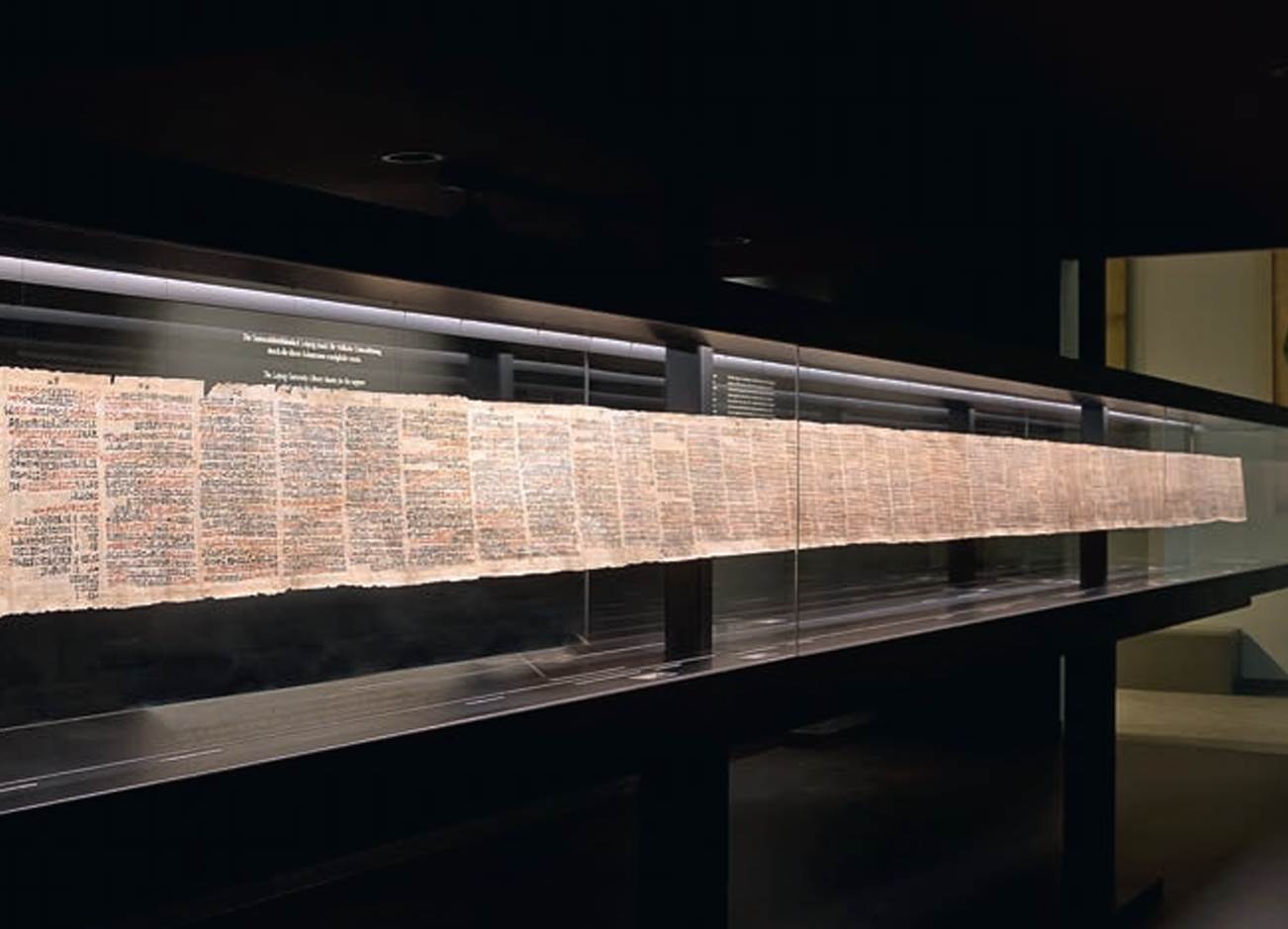
In 2021, a replica of the scroll went on display in a separate showroom in the foyer of Bibliotheca Albertina
Photo: courtesy Papyrussammlung der Universitätsbibliothek Leipzig
Papyrus Ebers
Length 18.63 metres, height 30 cm
Ref. Ebers Papyrus
Photos: courtesy Papyrussammlung der Universitätsbibliothek Leipzig
Panorama view VB 2026-01
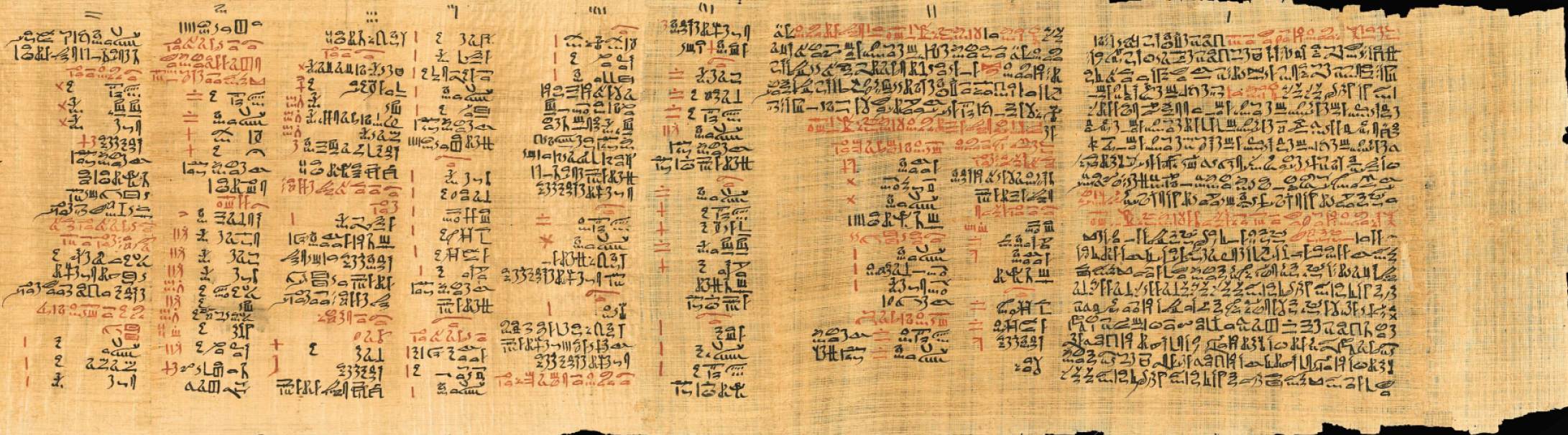
Columns (right to left) 1-8
1-6 Spells to be recited before medical treatment
7-8 Prescriptions for internal diseases