
The mummy of Djedptahiufankh
The mummy of Djedptahiufankh (CG 61097, coffins CG 61034), a prominent official of Egypt’s 21st Dynasty, was discovered intact within tomb DB320, and was partially unwrapped by Gaston Maspero on 29 June 1886. During this first examination, Maspero reported the presence of two serpent-shaped objects of unidentified material placed around the neck, along with a lotus flower wrapped among the linen folds. A heart scarab was also discovered resting on the chest, alongside a silver figure of a hawk with outstretched wings, likely representing a protective amulet of the god Horus.
A further examination by G.E. Smith took place two decades later, on 5 September 1906, during which additional bandages were removed. Smith uncovered a remarkable assemblage of jewellery and amulets, including delicate gold rings placed on the mummy’s fingers and toes. These rings seem to have served a practical function: securing the gold finger and toe caps in place, an unusual innovation in elite burial practice. Numerous carnelian amulets were found on the left arm, among them a uraeus, a serpent’s head, an heart amulet, a lotus bud, a barrel-shaped object, and another piece of unknown function shaped somewhat like the letter “Y.”
Associated with these were also a scarab and wedjat-eye made of mottled black and white stone; two additional lotus buds; another scarab; a djed-pillar amulet of light green stone; a broken object of uncertain form; and a “boomerang”-shaped object engraved with the image of the god Thoth. The embalming plate, covering the abdominal incision, was crafted from a copper alloy (identified by Smith as bronze), and bore the customary wedjat-eye in raised relief.
Djedptahiufankh was laid to rest in a richly ornamented double coffin set (CG 61034), which had not originally been commissioned for him. Inscriptions and stylistic evidence indicate that the coffins were first made for an individual named Nesshuenopet, while the coffin board appears to have been appropriated from yet another, unidentified person. The outer coffin was missing its gilded left hand, possibly the result of damage during placement rather than evidence of looting; otherwise, the coffins and coffin board were well preserved.
Accompanying the mummy were several grave goods, including three shabti boxes, an Osiris figure, and a funerary papyrus. Three different inscriptions were also found on Djedptahiufankh’s linen wrappings, shedding light on the dating and provisioning of his burial.
Source Bibliography: CCR, 200ff.; DRN, 201, 207, 212; MR, 572ff., 590, 592; RM, 112ff.; XRA, 4D11-4E6.
Djedptahiufankh was interred in DB320 at a date no earlier than Year 11 of Shoshenq I’s reign, as established by Reeves and supported by the presence of bandage inscriptions dated to Years 5, 10, and 11 of Shoshenq I. This chronology places his burial in the mid-22nd Dynasty. If this dating is correct, the often-suggested identification of Djedptahiufankh as the husband of Nestanebetisheru (daughter of Pinedjem II and Nesykhonsu) becomes highly improbable. Edward Loring, drawing on the linen docket from Nestanebetisheru’s mummy, dates her death to Year 13 of either Siamun or Psusennes I, which would mean that if Djedptahiufankh were her spouse, he would have outlived her by at least 22 or even 41 years, an unlikely scenario, especially as Djedptahiufankh’s mummy is that of a young man.
Reeves further argues that the interment of Djedptahiufankh provided an opportunity for necropolis officials to transfer the mummies cached in the tomb of Inhapi to DB320, which implies that his burial was likely the last original interment prior to the large-scale caching of royal and elite mummies. Stylistic analysis of his coffins and coffin board, characterised by features typical of the late 21st and early 22nd Dynasties, corroborates this dating.
Linen Docket Translations:
A. Year 5 of Shoshenq I/Iuput: ” Noble linen which the dual king (nsw bity) lord of he two lands Hedjkheperre son of Re lord of appearings Shoshenq-meramun made for his father Amun in Year 5; noble linen…”
Source Bibliography: DRN, 239; MR, 573 [transcr.]; RNT, 253 [31].
B. Year 10 of Shoshenq I/Iuput: “Noble linen which the dual king (nsw bity) lord of he two lands Hedjkheperre son of Re lord of appearings Shoshenq-meramun made for his father Amun (in) year 10; noble linen which the high priest of Amon-Re, great chief of the army Iuput, true of voice, king’s son of the lord of the two lands Shoshenq-meramun, made for his father Amun (in) Year 10”.
Source Bibliography: DRN, 239; MR, 573 [transcr.]; RNT, 253 [32].
C. Year 11 of Shoshenq I/Iuput:
Source: Edited from a now-defunct page of The Theban Royal Mummy Project via Wayback Machine
Source url: https://members.tripod.com/anubis4_2000/mummypages1/21B.htm
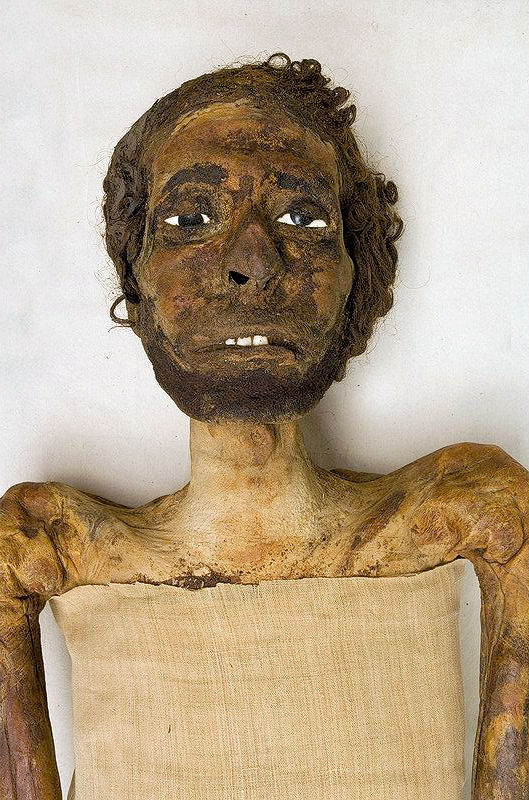
Djeptahiufankh’s mummy
Photo Patrick Landmann, ACI/Science Photo Library
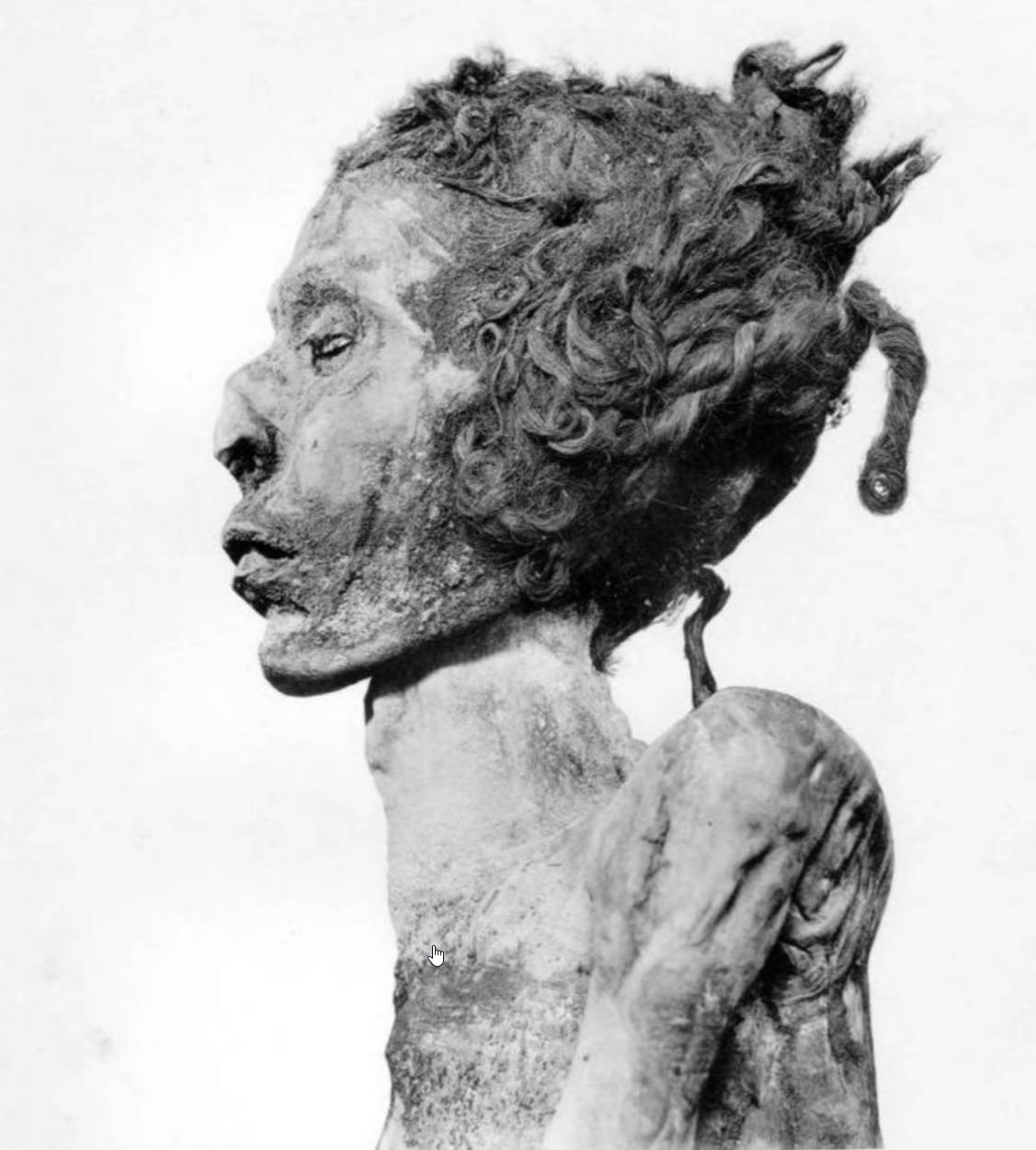
CG 61097
Djedptahiufankh’s mummy in the Boulaq Museum
See The Royal Mummies (1912) by Smith
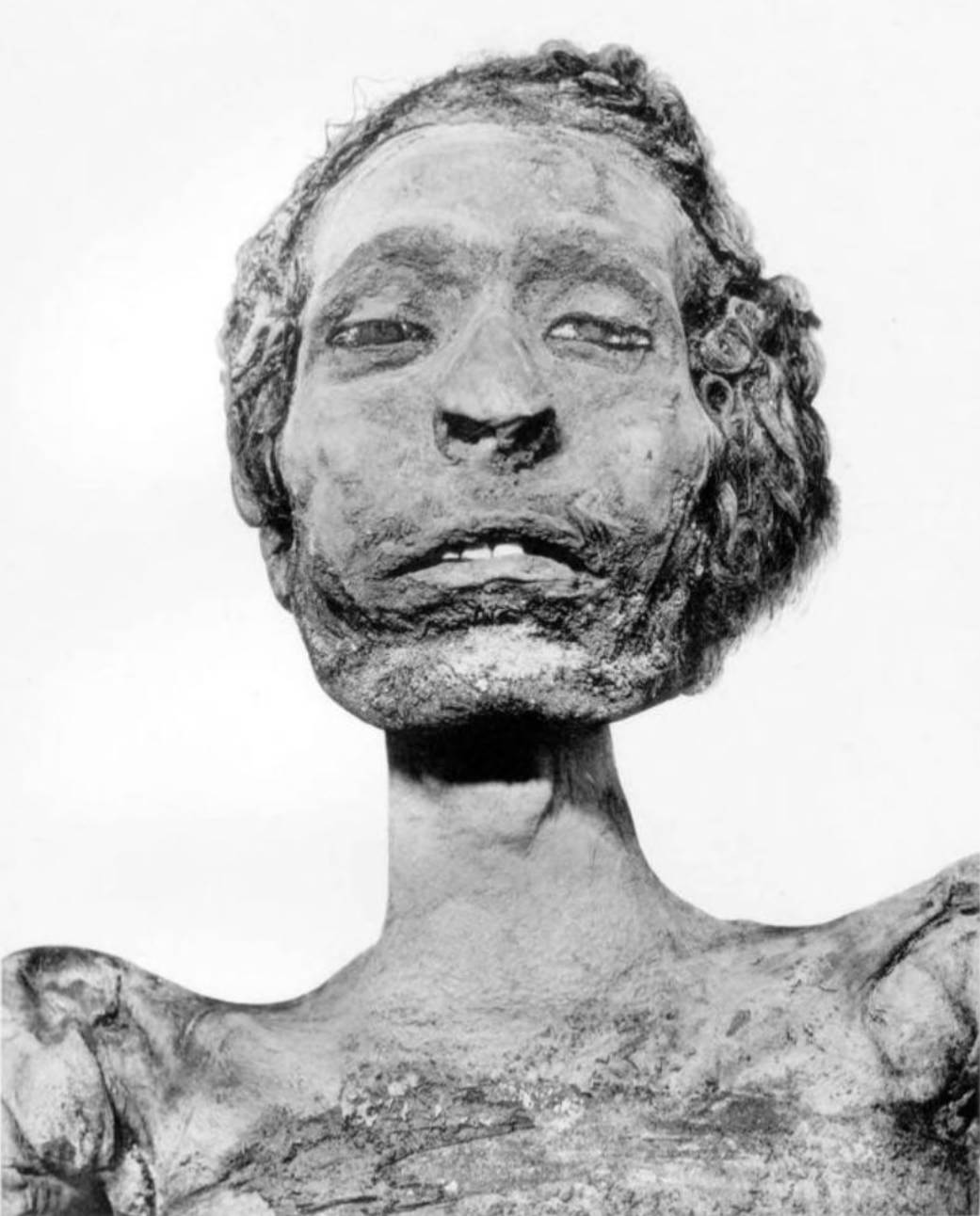
Djedptahiufankh’s mummy in the Boulaq Museum
See The Royal Mummies (1912) by Smith
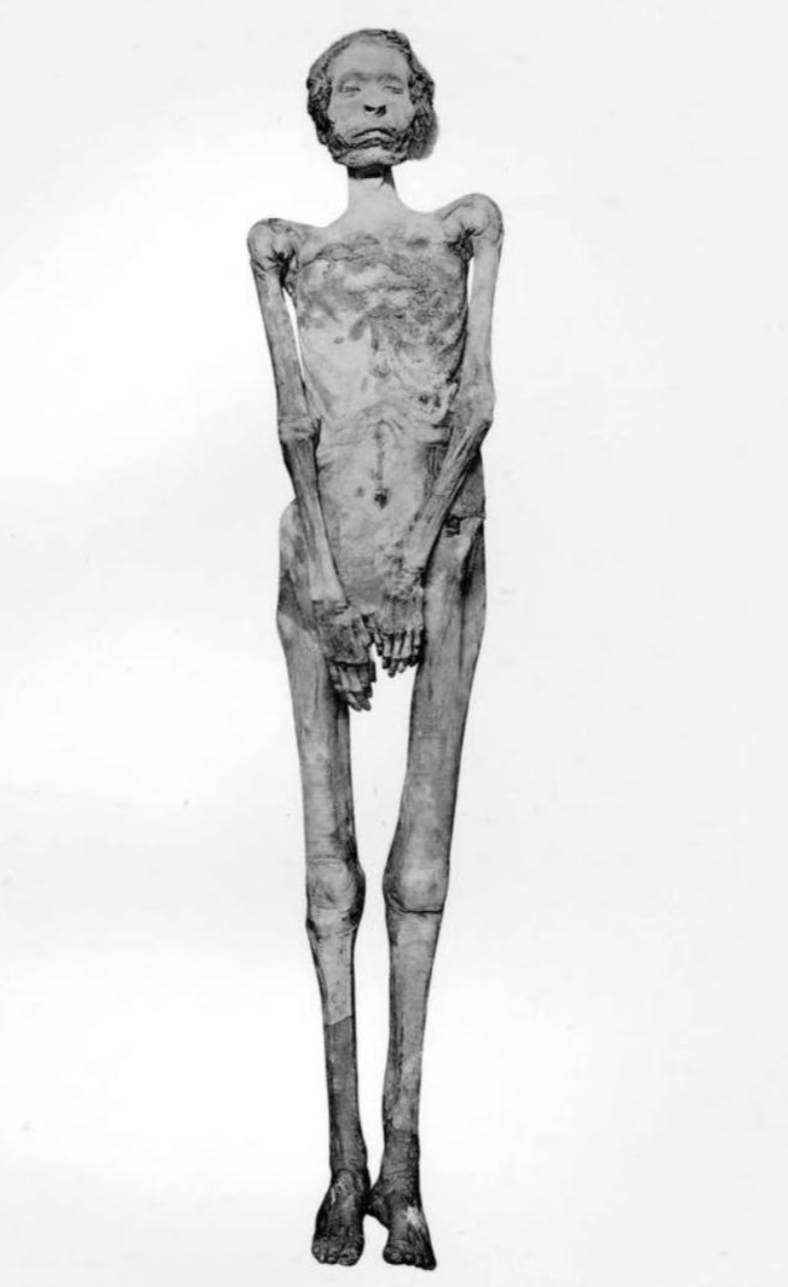
Djedptahiufankh’s mummy in the Boulaq Museum
See The Royal Mummies (1912) by Smith