
The mummy of Nesykhonsu A
The mummy of Nesykhonsu (CG 61095, coffin set CG 61030) was partially unwrapped by Gaston Maspero on 27 June 1886 and the procedure was completed by G.E. Smith in 1906. During this examination, Smith discovered flowers of an unidentified type wrapped around Nesykhonsu’s big toes, a long-stemmed flower on her left foot, and another encircling her left ankle. Despite being unable to determine her precise age at death, Smith noted that Nesykhonsu had no grey hairs, suggesting she was relatively young when she died. He observed a swollen abdomen and pronounced breasts, which led to the conclusion that she likely died during pregnancy or possibly childbirth. There is some consideration that Nesykhonsu may also have succumbed to a postpartum infection not long after giving birth.
Smith described Nesykhonsu’s mummy as a “typical example” of the embalming standards used in the 21st and early 22nd Dynasties. He noted various incisions through which packing materials, mostly sand and sawdust, were inserted under the skin of her neck, shoulders, arms, legs, and feet. Her hands were notably not packed. After removal for separate embalming, her body cavity was also packed with sawdust. A wax embalming plate was found over the incision in her lower left abdomen, covered with onion skins rather than the traditional Eye of Horus symbol.
Smith described Nesykhonsu’s face as narrow, elliptical, and graceful. However, a thick layer of resin obscured a complete view of her facial features. Artificial eyes of stone, which had significantly deteriorated, were present, possibly indicating some components of the inlay had become detached. Both ears were pierced, with noticeably stretched earlobes, suggesting the regular wearing of heavy earrings.
The mummy was covered with an Osiris-type shroud, which was probably cut through by the Abd el-Rassul family when they stole Nesykhonsu’s heart scarab; this item is now in the British Museum (EA 25584).
Source Bibliography: AoE, p. 70; CCR, 110ff.; BSFE 74 [1975], 27; DRN, 201, 207, 213, 218, 219, n. 68; JARCE 16 [1979], 49ff.; JEA 41, 83ff; MiAE, 242, 316, 330, ill. 399; MR, 566ff., 578 f., 590ff.; RM, 107ff.
Original Burial: In DB 320, in end chamber “F”. Reeves states that Nesykhonsu predeceased her husband (Pinedjem II) and dates her burial to Year 5 of Siamun 4 smw 21 based on a wall docket found at the bottom of the entrance shaft to DB 320, DRN, 256.
Wall Docket (from bottom of entrance shaft of DB 320):
Year 5 4 smw 21 of Siamun (or Amenomope? Osochor?/Pinudjem II?: “Year 5 4 smw 21. Day of burial (krs) of the chief of ladies Nesykhonsu, by the god’s father of Amun, overseer of the treasury Djedkhonsiufankh son of…; the prophet of Amun-Ra king of the gods Ankhefenamun; the elder (?) Nespay…; the god’s father of Amun, chief of the army Nespakashuty. The seals which are upon this place: the seal of the overseer of the treasury Djedkhonsiufankh; the seal of the scribe of the treasury Nes…”.
Source Bibliography: DRN, 237, #36; JEA 32 [1948], 26; MR, 520f. [facs., transcr.]; RNT, 251 [24]; TIP, 422 [68.].
Source 2025-07: Edited from a now-defunct page of The Theban Royal Mummy Project via Wayback Machine
Source url: https://members.tripod.com/anubis4_2000/mummypages1/21B.htm
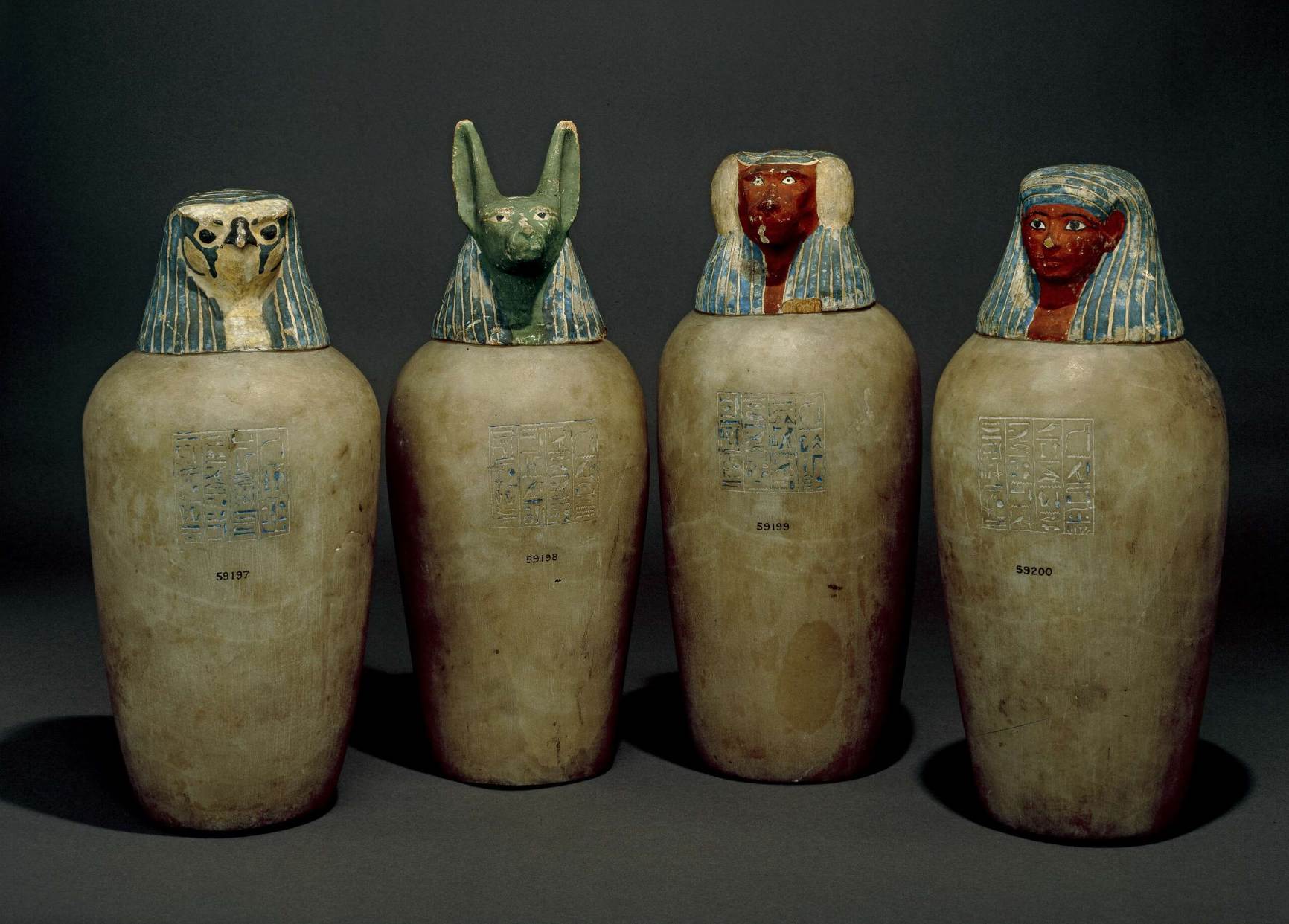
Nesykhonsu’s canopic jars
Photo: British Museum EA 59199

CG 61095
Nesykhonsu’s mummy in the Boulaq Museum
See The Royal Mummies (1912) by Smith
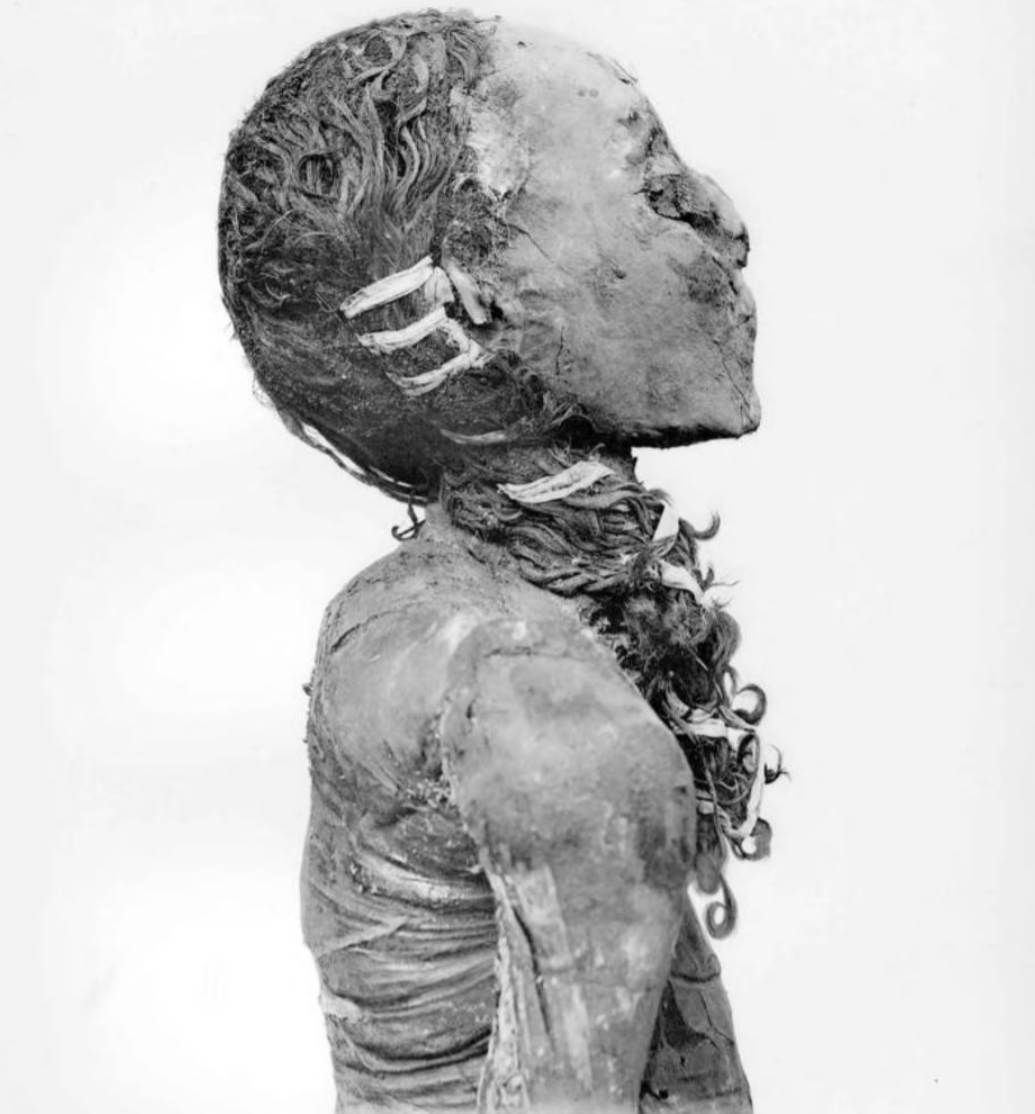
Nesykhonsu’s mummy in the Boulaq Museum
See The Royal Mummies (1912) by Smith
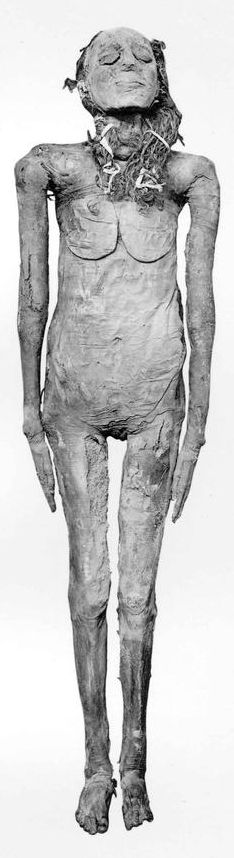
Nesykhonsu’s mummy in the Boulaq Museum
See The Royal Mummies (1912) by Smith